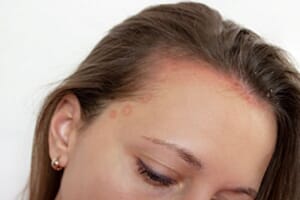


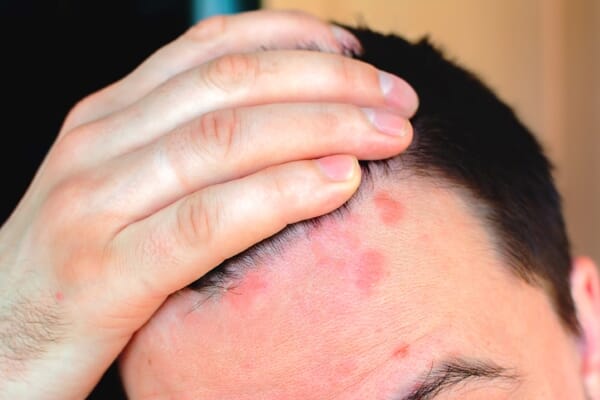
Waking up to find psoriasis on your face or around your hairline can be really upsetting. It's the most visible place for it to appear, and it often seems to come out of nowhere overnight.
But here's the thing: morning psoriasis usually doesn't appear randomly. Something triggers it. And one of the most common culprits? Your shampoo.
Research shows that people prone to psoriasis tend to have more reactive skin. This means chemicals in everyday hair products — especially harsh detergents like sodium lauryl sulfate — can irritate the skin around your hairline and trigger a flare-up while you sleep.
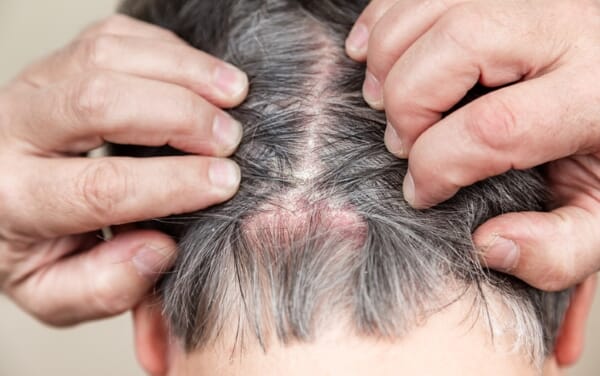
What actually happens with psoriasis?
Psoriasis affects around 2% of the UK population. It's caused by skin cells turning over too quickly.
Normally, a skin cell takes 21 to 28 days to mature. With psoriasis, cells turn over in just 2 to 3 days. They pile up so fast that live cells reach the surface before dead ones have shed. That's what creates those raised, scaly patches called plaques.
So what sets off those morning flare-ups? Here are the seven most common triggers — and what you can do about each one.
1. Could your shampoo be causing it?
Yes — and this is one of the most overlooked triggers.
Most ordinary shampoos contain chemical detergents to strip grease from hair. These same chemicals can irritate reactive skin, especially around the hairline and behind the ears. If your morning psoriasis appears in these areas, your shampoo might be the problem.
What to look for: Shampoos without sodium lauryl sulfate (SLS) and other harsh detergents are a good starting point. Even better are products with ingredients that actively help calm psoriasis-prone skin, rather than just avoiding the bad stuff.
One ingredient worth knowing about is Oregon Grape Root — a plant extract that's been specifically studied for psoriasis. Research shows it can help slow down the overactive skin cell production that drives the condition, and it's gentle enough for reactive skin.
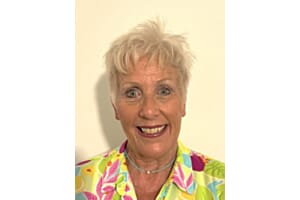
Morning psoriasis sufferer Clare Reece says: "In the morning the psoriasis on my scalp was always really bad; I would leave flakes of skin wherever I went. Since changing my hair care routine to Oregon haircare products, I've noticed that it was actually the shampoo I was using that was a big cause of my facial and scalp psoriasis."
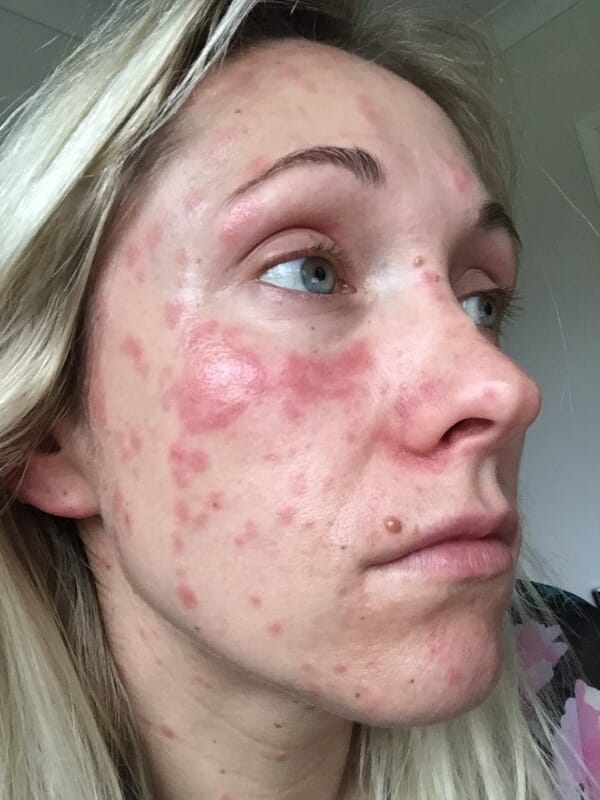
Clare Reece (Essex)
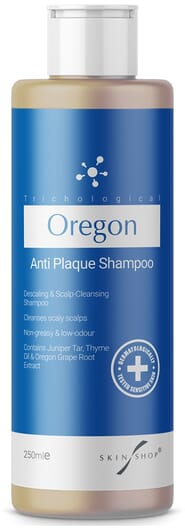
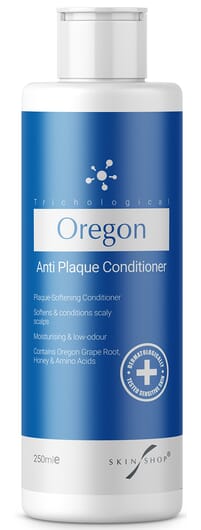
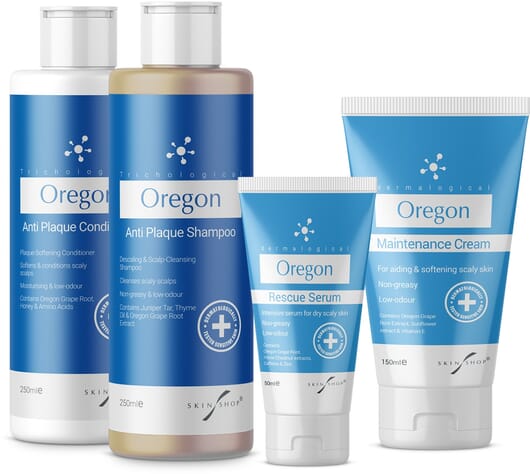
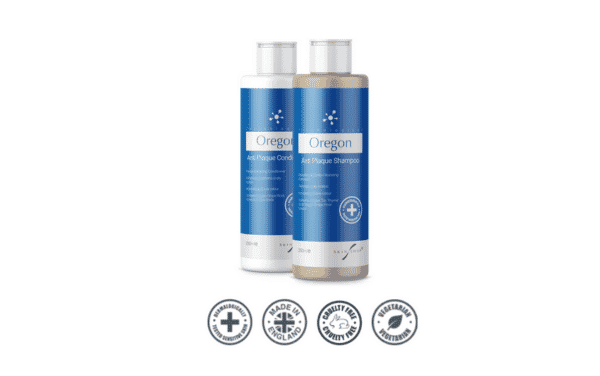
The Oregon Shampoo and Oregon Conditioner were developed by one of the UK's leading hair scientists and trialled at Bath University. In a two-month trial of 50 people, they improved scalp and facial psoriasis for 86% of participants, with three-quarters seeing marked improvement after just four weeks. They're also free from coal tar and SLS, which many people prefer to avoid.
2. Does cold weather make morning psoriasis worse?
It often does. Cold, dry air strips moisture from your skin overnight, making flare-ups more likely when you wake.
Winter brings a double hit: less humidity outdoors and dry central heating indoors while you sleep. On top of that, you get less natural sunlight — and moderate sun exposure can actually help calm psoriasis symptoms.
A 2021 study found that over half of psoriasis patients experience worse symptoms in autumn and winter.
What helps: Keep skin well-moisturised before bed and consider using a humidifier in your bedroom. It's also worth checking your hair care routine — dry, irritated skin is more vulnerable to reactions from harsh shampoos, so switching to gentler products during winter can make a noticeable difference.
3. Can stress and poor sleep trigger a flare-up?
Absolutely. Stress is one of the most common psoriasis triggers — and it's closely linked to sleep.
When you're stressed, your body releases cortisol, which can weaken your skin barrier and trigger inflammation. The frustrating part? Having a flare-up can cause more stress, creating a cycle that's hard to break.
Periods of high stress often lead to insomnia or restless sleep. This combination makes morning flare-ups much more likely.
What helps: If you notice psoriasis appearing after difficult nights, focus on what you can control. A calming bedtime routine makes a difference — and that includes what you put on your skin and hair before bed. Avoid products with strong fragrances or harsh chemicals that might irritate while you sleep.
4. Can a cold or flu trigger morning psoriasis?
Yes. Common infections can spark a sudden flare-up.
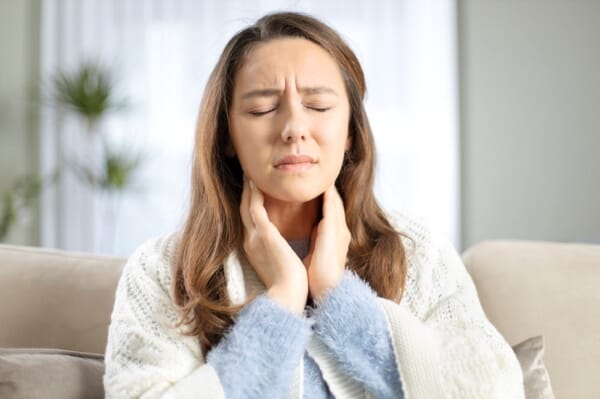
Throat infections, colds, and flu all put pressure on your immune system. Since psoriasis is an immune-related condition, anything that stirs up your immune response can trigger symptoms.
Strep throat is particularly well-known for this — it can trigger guttate psoriasis, which causes small, drop-shaped patches. And because symptoms of illness tend to worsen at night when body temperature rises, you're more likely to wake up to a new flare-up the next morning.
What helps: When you're run down, your skin is more reactive to everything — including products you normally tolerate. Stick to gentle, psoriasis-friendly products when you're unwell, and keep your scalp and hairline clean without over-washing.
5. Is there a link between allergies and morning psoriasis?
There is. Research shows people with psoriasis are more likely to have a high number of inflammatory mast cells — the same cells involved in allergic reactions like swelling and itching.
This means skin allergies from things like pollen on bedding, certain washing powders, or sleeping with the window open could trigger overnight flare-ups.
What helps: Think about everything that touches your skin while you sleep — bedding, pillowcases, pyjamas, and hair products. Residue from shampoos and conditioners ends up on your pillow, which then sits against your face all night. Using hair products designed for sensitive, psoriasis-prone skin reduces one more potential irritant.
6. Can sunburn trigger psoriasis overnight?
Yes — and it often shows up the next morning.
This might seem contradictory since moderate sun exposure can help psoriasis. But sunburn is different. Any trauma to the skin that causes inflammation — whether sunburn, cuts, or scratches — can trigger what's called the Koebner phenomenon, where psoriasis appears at the site of injury.
Since sunburn symptoms and heat often get worse overnight, a new patch of psoriasis can appear right where the burn was by the time you wake up.
What helps: Protect your face with SPF, especially on the hairline and forehead where psoriasis commonly appears. If you do get caught out, treat the burn gently — and avoid any harsh products on the affected area while it heals.
7. Does drinking alcohol affect morning psoriasis?
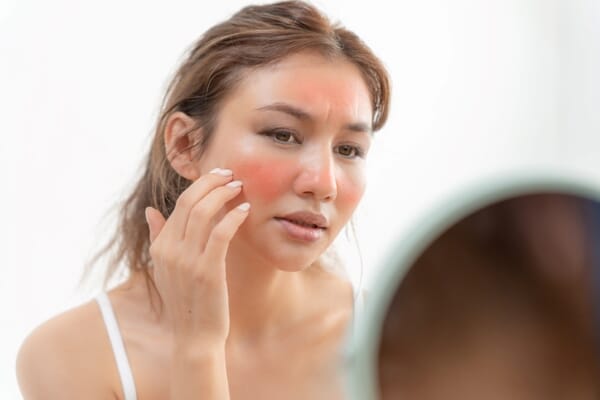
It can. Alcohol dehydrates the skin and can affect how your immune system functions — effects that often show up the next day.
Research has linked regular alcohol consumption to more frequent flare-ups and more severe symptoms. It can also interfere with some psoriasis medications, making them less effective.
What helps: You don't need to give up alcohol entirely, but if you notice your skin is worse the morning after drinking, cutting back might help. Drinking water before bed and keeping up your usual skincare routine — even after a night out — can reduce the impact.
What can you do about morning psoriasis?
The first step is working out which triggers affect you. Everyone's psoriasis is different, and keeping track of flare-ups alongside lifestyle factors can help you spot patterns.
What you'll notice is that many of these triggers have something in common: they make your skin more reactive and vulnerable. That's why the basics matter — keeping skin moisturised, avoiding harsh chemicals, and using products designed for psoriasis-prone skin.
For facial and scalp psoriasis that appears around the hairline, your shampoo is often the easiest place to start. Products containing Oregon Grape Root have been clinically shown to help reduce symptoms for many people — without the harsh detergents that can make reactive skin worse.
And if your symptoms persist or get worse, it's always worth speaking to a dermatologist or GP who can advise on the best approach for your skin.
About the Author
Dr Eva Melegh is a consultant dermatologist with over 20 years of clinical experience specialising in chronic inflammatory skin conditions, including psoriasis, atopic dermatitis, and rosacea. She has worked at leading institutions including Semmelweis University Dermatology Clinic and has extensive experience as a clinical trial leader for biological treatments for psoriasis and other skin conditions. Dr Melegh regularly provides expert advice on dermatology and skincare for UK publications.